
Santos Brasil begins remote operation of quay cranes at Tecon Santos
Santos Brasil began remotely controlling two Ship-to-Shore cranes at Tecon Santos. The operation started during daytime hours with four qualified operators, while another 24 began training.
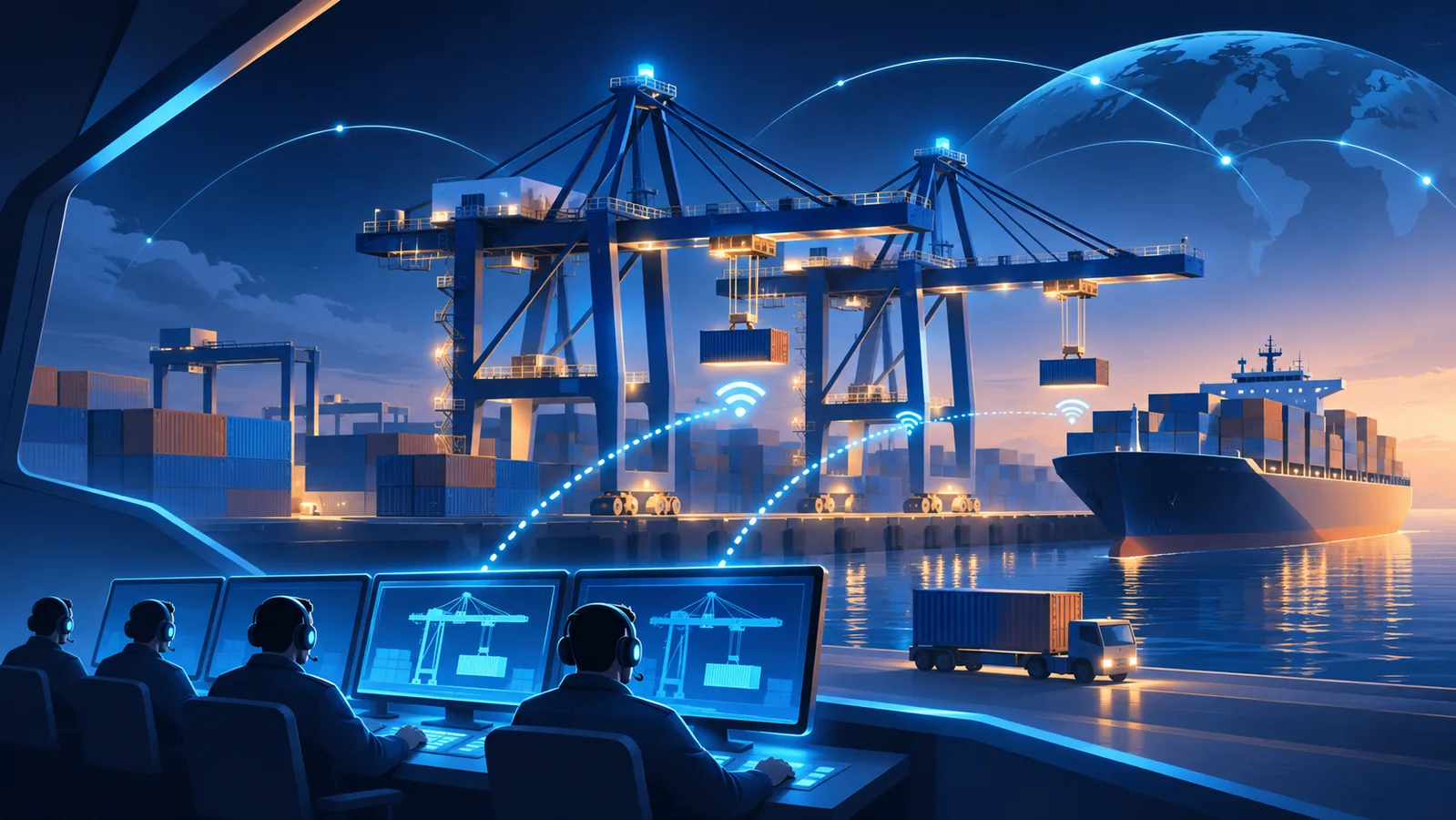
Santos Brasil began remotely operating two quay cranes at Tecon Santos, at the Port of Santos (SP). With the change, the equipment is no longer controlled from cabins installed high above the quay and is now operated from a room in an administrative building.
The cranes were manufactured by ZPMC and delivered to the terminal in January 2026. Each unit is 50 meters high, has a reach of 70 meters, and can simultaneously handle up to two full 20-foot containers, with a total load of up to 100 tonnes per cycle.
The structure includes 20 cameras, smart sensors, laser scanning, and sway-control systems. The scanning makes it possible to monitor in real time how cargo is arranged in ships' holds and on their decks. The equipment also has the Chassis Position System, which helps align trucks while containers are being received.
At the control room, the operator uses six monitors, three joysticks, and an integrated radio. Access is biometric. According to the information released, the model reduces workers' exposure to work at height, improves ergonomics, and eliminates vertical movement during shift changes.
At this initial stage, remote operation runs during the day and has four qualified operators. Another 24 professionals began technical training in November 2026.
The initiative expands on automation experience started at the end of 2024 in the terminal's storage yard. Currently, 16 electric rubber-tired cranes operate remotely in that area. Santos Brasil also plans to add 30 other electric units in the coming years, replacing diesel-powered equipment. The reported projection is to avoid monthly emissions of 713 tonnes of carbon dioxide, equivalent to a 97% reduction in emissions from this fleet.
Tecon Santos's quay cranes already operate entirely on electric power. Since 2019, investments in expanding and modernizing the terminal have exceeded R$ 2.5 billion, raising the unit's capacity to 2.9 million TEUs per year.