
Panama Canal reduces daily slots amid declining rainfall
The temporary restriction begins in September 2026 and changes the number of transits, reservations for different types of cargo, and the draft schedule for the Neopanamax locks.
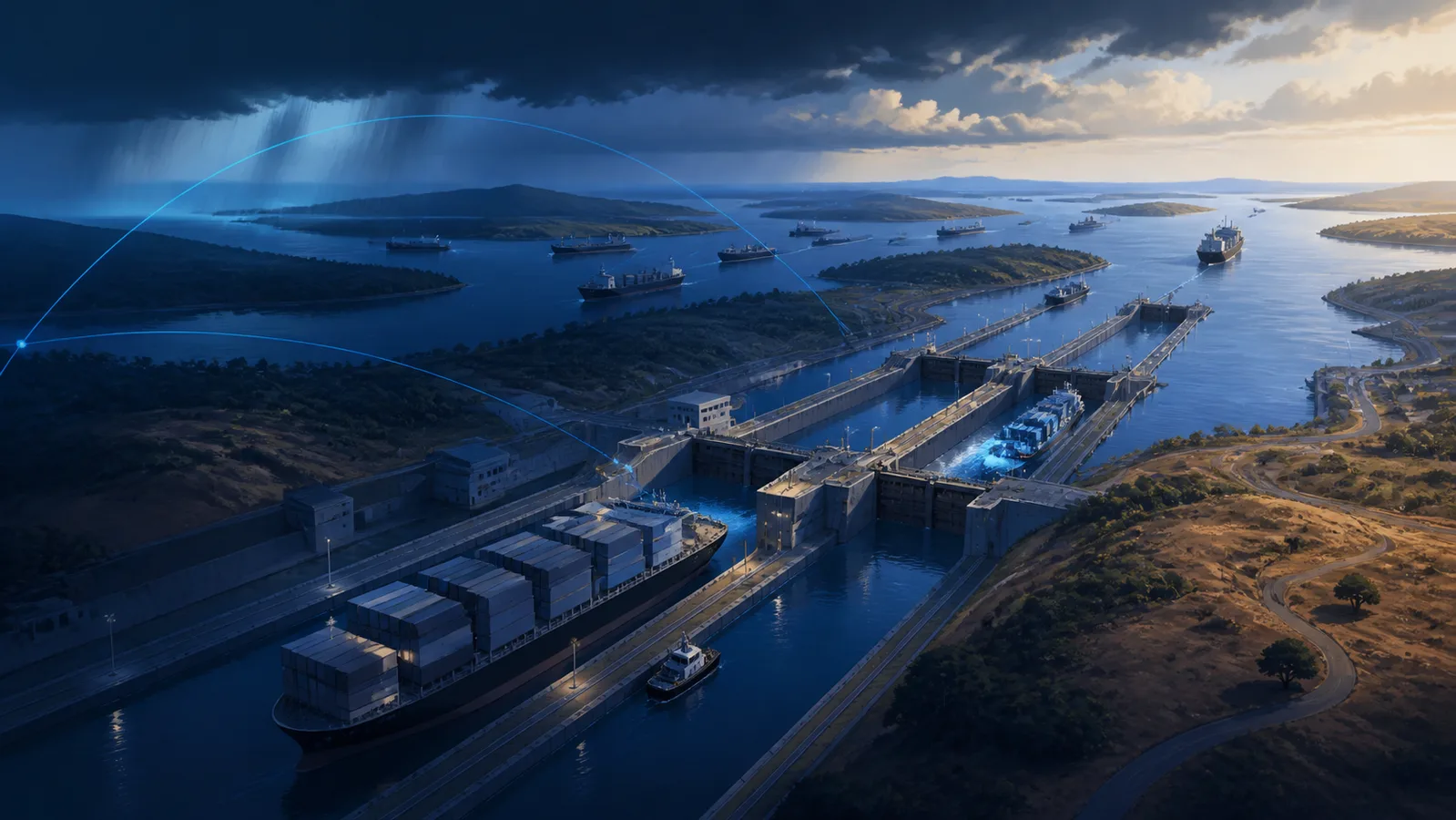
Temporary restriction
The Panama Canal will reduce its daily transit capacity in September 2026 because of declining rainfall in the watershed that supplies the route. The change comes as the El Niño phenomenon advances, associated with changes in Pacific temperatures and climate effects such as periods of drought.
Starting September 3, 34 transits per day will be authorized, compared with the 36 previously planned. The offer will fall again on September 15, when the limit will be 32 vessels per day.
Slot allocation
The Neopanamax locks, designed for wider ships, will have nine daily slots starting September 3. The Panamax locks will have 25 slots during the same period. On September 15, the number available for Panamax vessels will be reduced to 23.
The canal will also reorganize transit auctions for Neopanamax, Super, and Regular vessels into four groups. The division will cover, respectively, liquefied natural gas carriers and liquefied petroleum gas carriers; bulk carriers and general cargo ships; container ships, car carriers, and reefer ships; and oil tankers and chemical product tankers.
The Panama Canal Authority may temporarily suspend the entire Transit Reservation System or part of it if necessary to preserve the safety and efficiency of the operation.
Draft and water availability
Based on the level of Gatun Lake and weather forecasts, the canal postponed until September 2 the application of the maximum draft of 14.63 meters in the Neopanamax locks. Another planned reduction, to 14.48 meters, had its effective date moved from September 3 to October 1.
The administrator reported that water-conservation measures and the arrival of the rainy season were not enough to offset current conditions in the watershed. Between May and August, rainfall was about 34% below the historical average.
The canal, which connects the Atlantic and Pacific oceans and is approximately 80 kilometers long, had already faced a severe restriction between 2023 and 2024. During that period, the number of daily transits was reduced from 38 to 22 because of the low level of the lakes that supply water for the operation.