
Dredging in Babitonga Bay opens a new front in competition for containerized cargo
A R$333 million project could increase the access channel’s draft and allow larger ships to operate in the port complex; the result will depend on maritime services, land infrastructure, and carriers’ decisions.
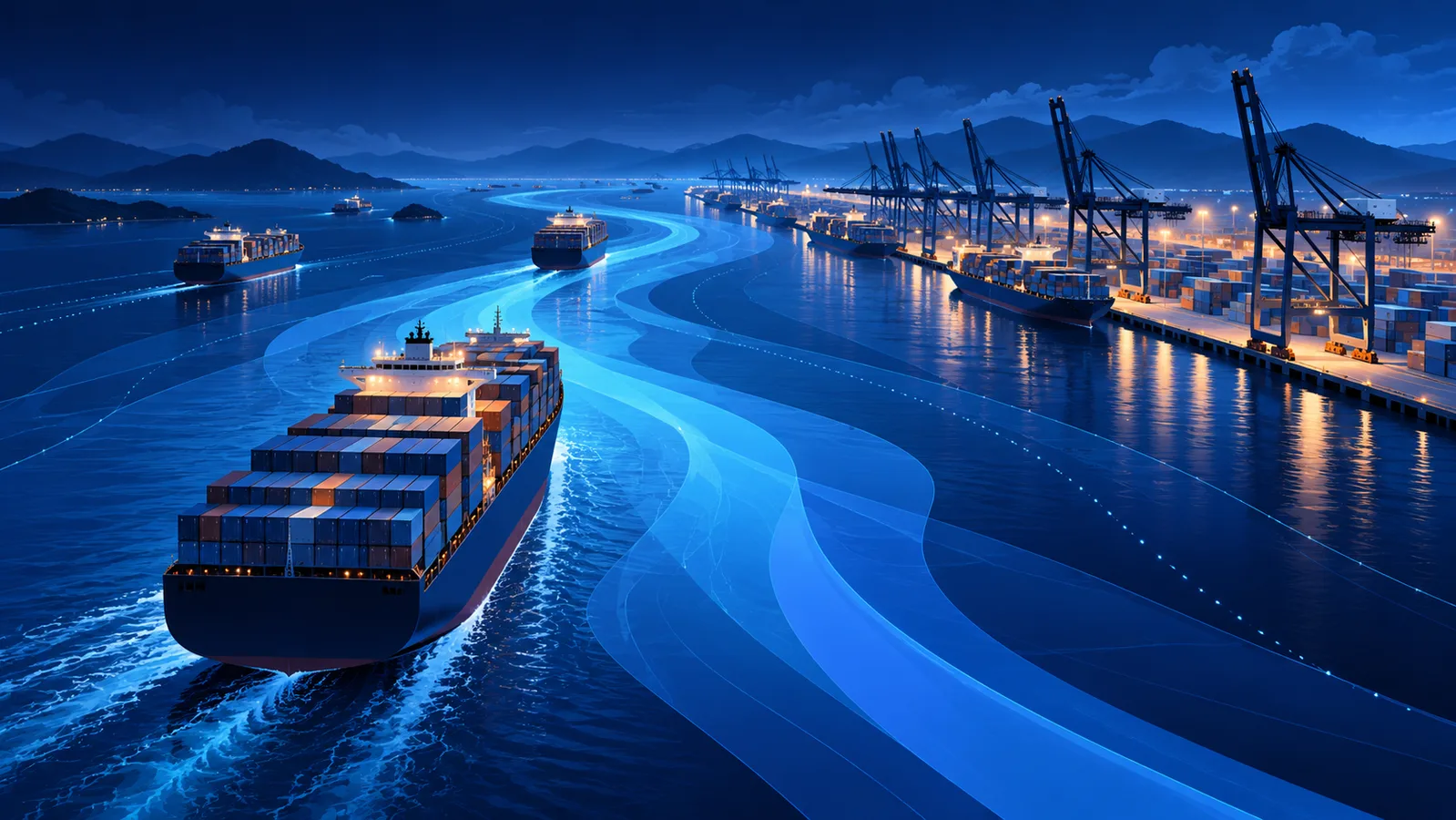
Dredging of the access channel to Babitonga Bay has entered its final phase and could change the competition for containerized cargo in Southern Brazil. The project aims to increase the depth from 14 to 16 meters, creating conditions for vessels of up to 366 meters to operate in the complex formed by the ports of São Francisco do Sul and Itapoá.
The work has an estimated cost of R$333 million. Of that total, R$300 million is financed by Porto Itapoá, while R$33 million is the responsibility of the public port authority. The agreement provides for reimbursement of the private contribution through 2037, using funds tied to the additional tariff revenue expected after the increase in vessel calls and cargo handling.
By the end of August, 88% of the dredging had been completed. The Galileo Galilei dredger removed 10.6 million cubic meters of sediment, compared with a projected total of 12 million. Completion was expected in the second half of 2026.
Once the work is completed and the results are verified, the infrastructure could receive ships of up to 16,000 TEUs. For its own operation, Porto Itapoá works with a more conservative reference of vessels up to 14,000 TEUs. The effective capacity per call will depend on each ship’s design, the maritime service, and commercial and operational conditions.
The private terminal intends to use this greater capacity to seek maritime services and compete for cargo that currently moves through Santos and Paranaguá. The strategy covers industrial and agro-industrial goods from Santa Catarina and Paraná, including food, proteins, refrigerated products, machinery, chemicals, auto parts, electronics, and consumer goods.
There is still no projection from the port for the number of additional calls or the annual volume that could be attracted. The sources attribute that result to carriers’ decisions, demand, and the conditions of each service. There is also no origin-and-destination study capable of calculating how much cargo from Santos and Paranaguá could be transferred to Babitonga.
The channel expansion is accompanied by investments on land. Porto Itapoá says it will invest approximately R$500 million in a new expansion phase, adding 120,000 square meters to the yard, installing an eighth quay crane, acquiring new equipment, reinforcing the infrastructure for refrigerated containers, adding automation, and creating an exclusive access route for trucks. The forecast is to increase daily vehicle access from 2,000 to 3,000.
The company ended 2025 with just over 1.5 million TEUs handled and reports installed capacity close to 1.8 million TEUs per year. Once the investments under way are completed, the stated projection is to reach around 2 million TEUs annually. In the first half of 2026, approximately 412,000 containers were handled; in June, the terminal recorded just over 74,000, its highest monthly result to date, according to the company itself.
For the Federation of Industries of Santa Catarina, the new draft could reduce loading restrictions and the unit cost of maritime transport, especially by reducing the need to load ships below their capacity. The organization cautions that this effect is not automatic: it depends on the effective presence of larger ships, competition among carriers and terminals, direct routes, fewer transshipments, and a prepared inland connection.
On this point, access infrastructure remains a factor requiring attention. Bottlenecks were identified on the BR-280 and BR-101 highways and on the final connections to São Francisco do Sul. For Itapoá, SC-416, which connects the municipality to BR-101, is also considered strategic. Railways are cited as an alternative, but only 17% of the Santa Catarina network on the Mafra–São Francisco do Sul section is reportedly in operation.
Fiesc assesses that Santos and Paranaguá still retain advantages in scale, international connectivity, service frequency, access, and hinterland areas. Therefore, according to the assessment presented, the most likely effect of the work is a gradual gain in market share on specific routes and in specific segments—such as refrigerated cargo and manufactured goods—rather than an immediate replacement of the major competing ports.
In August, Porto Itapoá also announced the opening of an office in China to strengthen relations with carriers, customers, and investors and to seek new connections. The move combines the maritime expansion enabled by the dredging with an effort to broaden the terminal’s commercial offering in the international market.