
Moegão begins integration with a private terminal at Paranaguá Port
Connecting the Moegão central gallery to the ALTP terminal marks the start of integrating the terminals in the East Export Corridor with the rail receiving system for bulk agricultural products.
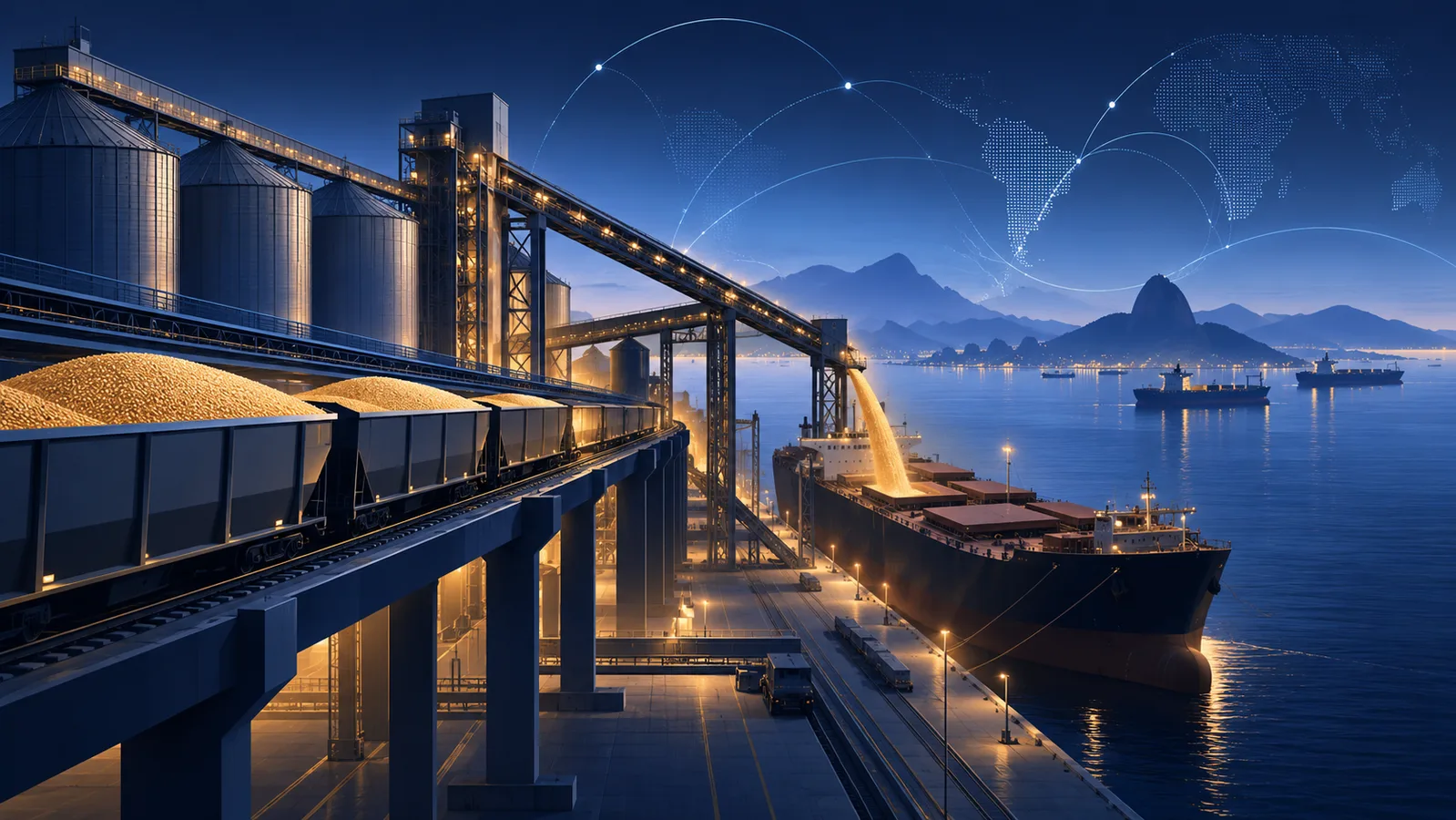
The Moegão central gallery at Paranaguá Port was connected to a private terminal for the first time. The integrated structure was installed at the ALTP terminal, a consortium formed by Louis Dreyfus Company and Amaggi that is responsible for PAR 25.
The operation took place on Sunday morning, the 11th, and required the closure of Avenida Portuária and the mobilization of dozens of professionals. To position the 55-meter-long metal structure, which weighs approximately 35 tonnes, workers used a heavy-lift crane capable of lifting up to 600 tonnes to a height of 48 meters. The lift took about two hours, followed by another four hours of securing work.
With the installation complete, the terminal became connected to the Moegão central gallery, which is 1.7 kilometers long and includes more than 4,000 meters of conveyor belts. The system will carry products unloaded from railcars to the port terminals.
Integration is expected to advance through October 2027, when all 11 terminals in the East Export Corridor are expected to be connected to the complex. Moegão was designed to centralize the rail receiving of grains and meal destined for export and has an estimated investment of R$700 million.
The complex will have three independent railway lines, capacity to receive up to 180 railcars simultaneously, and the ability to unload up to 900 railcars every 24 hours. With centralized operations, the port's annual rail-receiving capacity could reach 24 million tonnes, compared with just over 5 million tonnes currently.
The change should also reduce the impacts of rail traffic on the port area's roads. Because railcars will no longer be directed individually to the terminals and trains will not need to be split, the number of level crossings is expected to fall from 16 to five. Traffic interruptions, which can currently exceed 40 minutes during some operations, are expected to be limited to the time needed for the train to pass, estimated at between 10 and 15 minutes.
Source
https://www.portosdoparana.pr.gov.br/Noticia/Porto-de-Paranagua-realiza-primeira-conexao-do-Moegao-com-terminal-privado