
Port of Santos bunkers an ocean-going vessel with Brazilian ethanol
The operation supplied the CMA CGM IRON container ship with approximately 640,000 liters of ethanol and opens a path for the use of biofuels in international shipping.
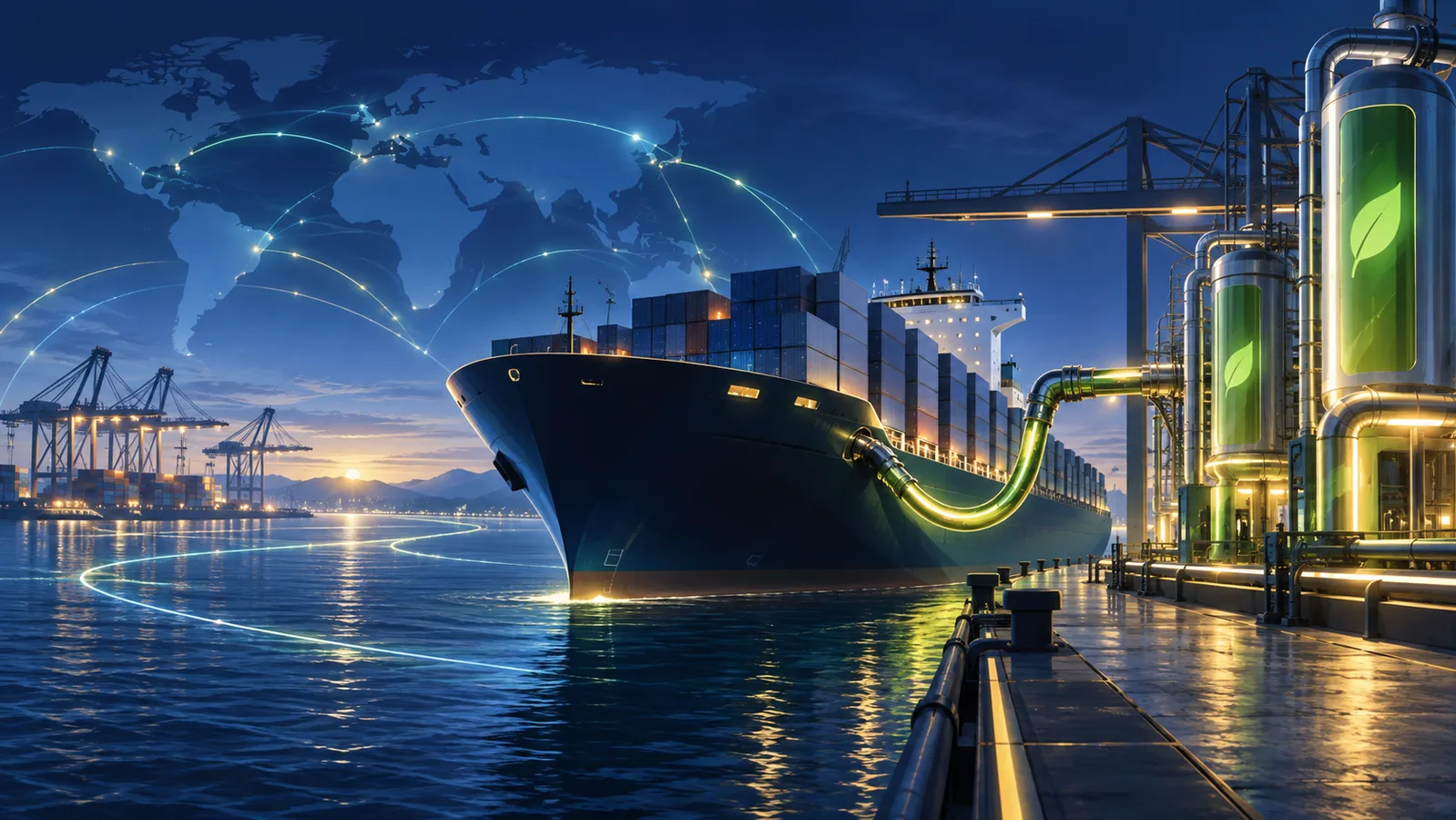
The Port of Santos carried out the first bunkering of an ocean-going container ship with ethanol produced in Brazil. The operation involved Copersucar, CMA CGM, Bunker One, AGEO Terminais, the Santos Brasil Terminal, and engine manufacturer Everllence.
The fuel was transferred to the CMA CGM IRON, a vessel with capacity for 13,000 TEUs and a three-fuel engine certified to operate with fossil bunker fuel, methanol, and ethanol. In total, 500 tonnes of biofuel were supplied, equivalent to approximately 640,000 liters.
The operation was prepared over approximately two years. The process included producing the ethanol at a Copersucar plant, transporting it to Santos, storing it at a dedicated terminal, transferring it to a barge, and finally bunkering the vessel.
The ethanol used is hydrous, meets the specifications of the National Agency of Petroleum, Natural Gas and Biofuels (ANP), and was produced at a plant with international certification. The vessel will continue to Asia, using the fuel on part of the voyage and combining it with other fuels compatible with its engine.
According to the companies involved, the voyage will make it possible to monitor parameters such as efficiency, range, and operational performance. The initiative also places Brazil among the countries capable of supplying renewable fuels to vessels engaged in deep-sea shipping.
The operation may expand Santos’s role in low-carbon maritime bunkering, supported by the commercial availability of ethanol and the infrastructure already in place in Brazil for its production and handling. CMA CGM said it plans to operate approximately 200 vessels capable of using low-carbon energy by 2031, as part of its goal of carbon neutrality by 2050.