
Shipping lines expand their return to the Suez Canal, but a full resumption is still not on the horizon
Maersk and Hapag-Lloyd shifted new services between Asia and Europe to the Suez corridor, reducing transit times on specific routes. The companies, however, condition further changes on security in the Red Sea and the Middle East.
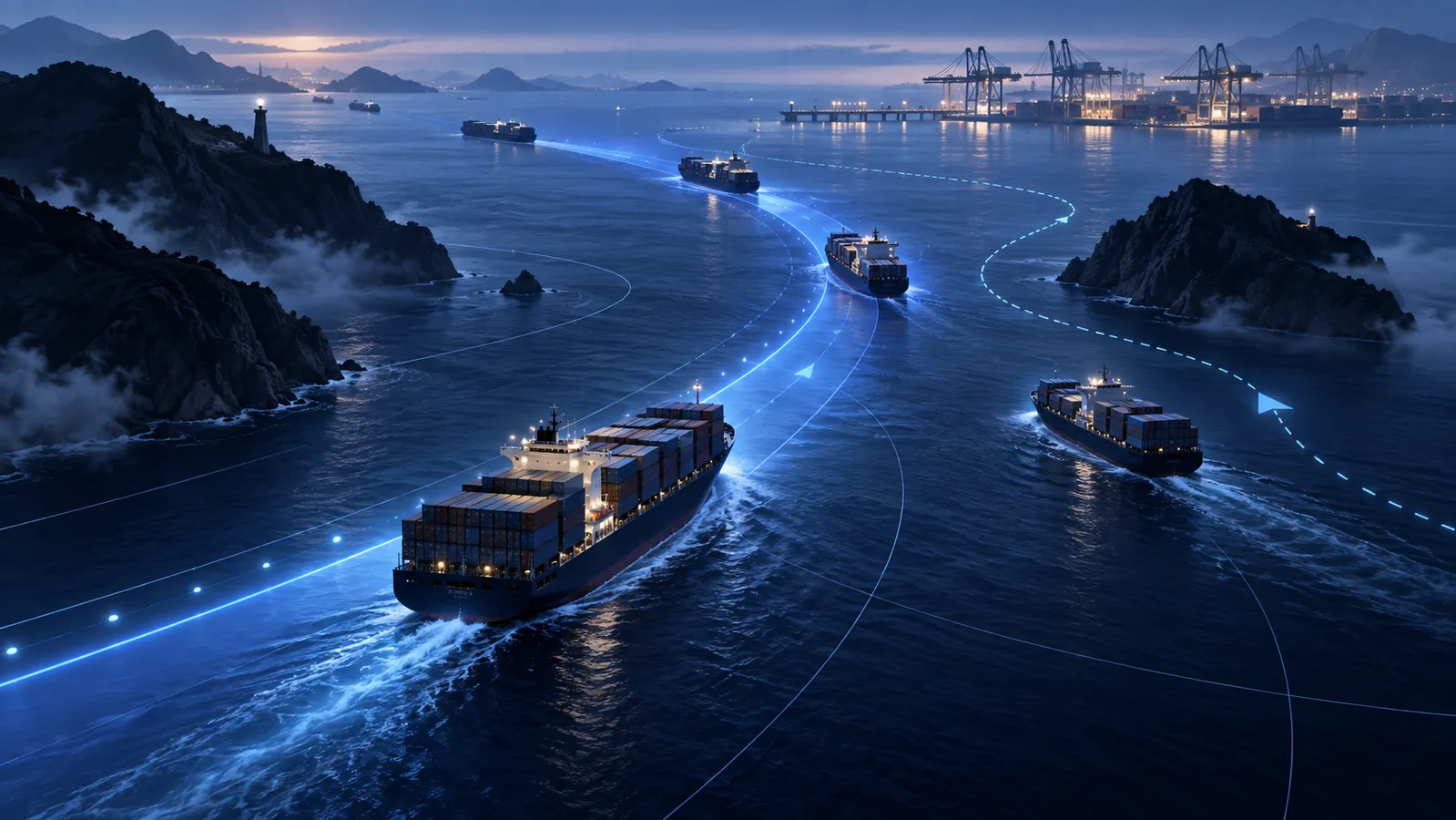
Maersk and Hapag-Lloyd have begun a new stage in their gradual return to the Suez Canal after keeping most Asia–Europe services on the route around the Cape of Good Hope. The change puts some services back on the shorter corridor between Asia and Europe, but it does not yet represent a broad reopening of the route across the entire network.
In one of the announced moves, the AE19 service, operated by both companies under the Gemini Cooperation, began using Suez instead of sailing around Africa. The change took effect immediately and began with the westbound voyage of the Berlin Maersk. According to Hapag-Lloyd, it may reduce transit time by about four weeks compared with the route around the Cape of Good Hope.
Maersk said the decision followed an assessment of security conditions in the Red Sea. Hapag-Lloyd described the measure as an adjustment targeted at a specific service, rather than a generalized resumption across its network. The company added that future changes will depend on security, operational feasibility, and the effects on customers.
The sources also report another announcement expanding the return. According to Maersk, the joint AE5, AE11, AE12, and ME2 services would be transferred to the Suez corridor, offering more efficient transit times. The two companies had already announced, at the beginning of July and again in August, the resumption of some services connecting Asia with the Mediterranean and Europe.
Despite these moves, another nine Maersk services that could benefit from the route through the Red Sea and the Suez Canal were still, according to information provided to Euronews, sailing around the Cape of Good Hope. The company did not comment on possible future changes.
The caution is related both to the security situation and to capacity management. The route around Africa requires more ships because it lengthens voyages, while a simultaneous return to Suez could release vessels at a time when the industry is receiving a large number of new ships. For analysts interviewed by Euronews, a rapid return could put downward pressure on rates.
The gradual return also limits the short-term effect on European importers. Specific services may offer shorter voyages, but transit times across the entire network are not expected to immediately return to their previous patterns.
The Suez Canal is the shortest maritime link between Asia and Europe. Reduced use of the route increased voyage duration and fuel consumption, as well as affecting Egypt’s revenue. In June, the Suez Canal Authority said that operational savings and shorter transit times were contributing to the return of some container ships.
The passage of the CMA CGM Vendôme, with capacity for 24,000 twenty-foot containers, marked the FAL 3 service’s first southbound passage through the canal since January. According to the authority, CMA CGM ships made 104 passages between January and May, totaling 12.5 million tonnes.
The moves by Maersk and Hapag-Lloyd indicate an initial recovery in Suez traffic, but the companies themselves and the analysts cited by the sources consider that there is still no basis for describing it as a broad resumption.